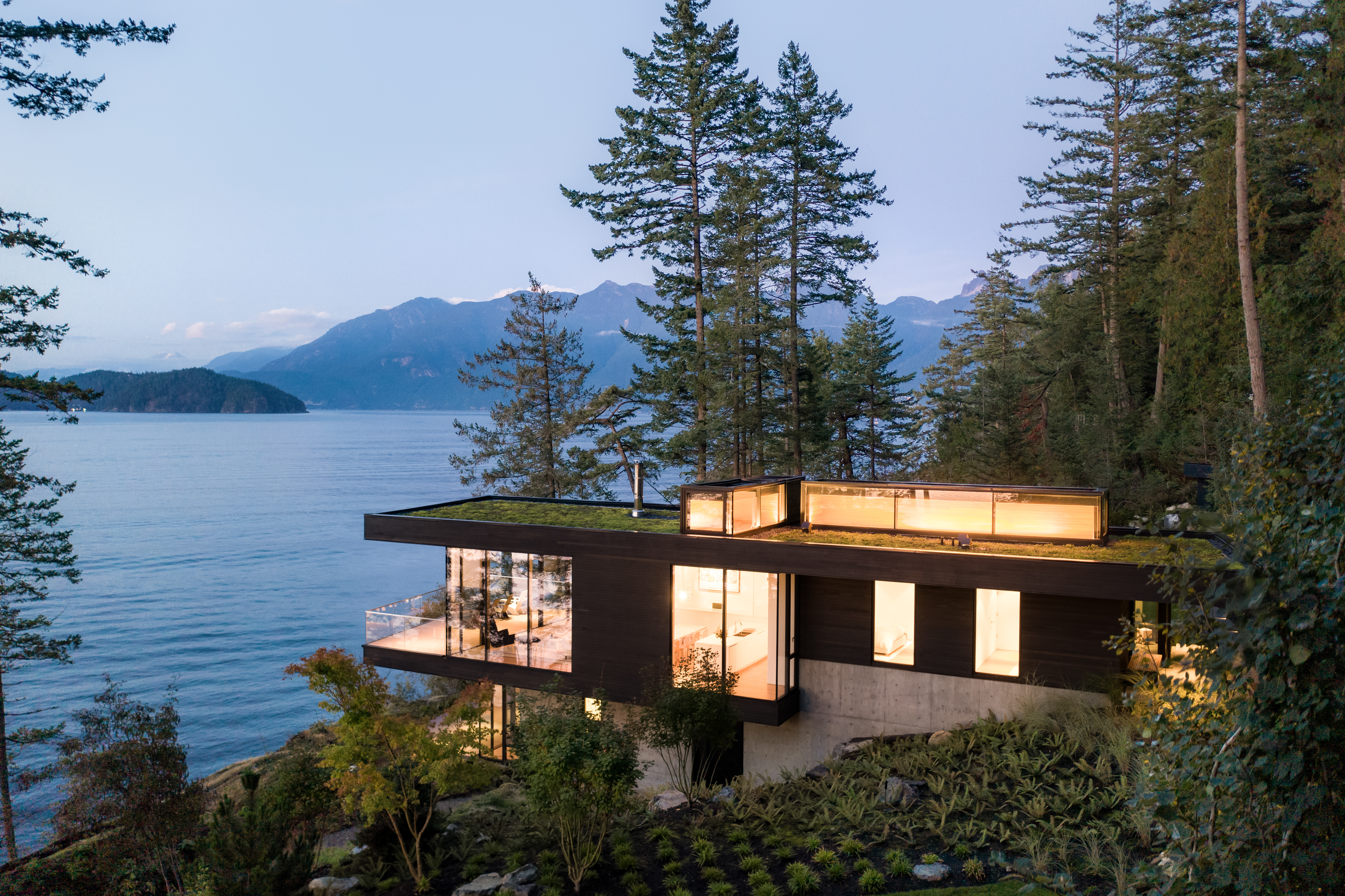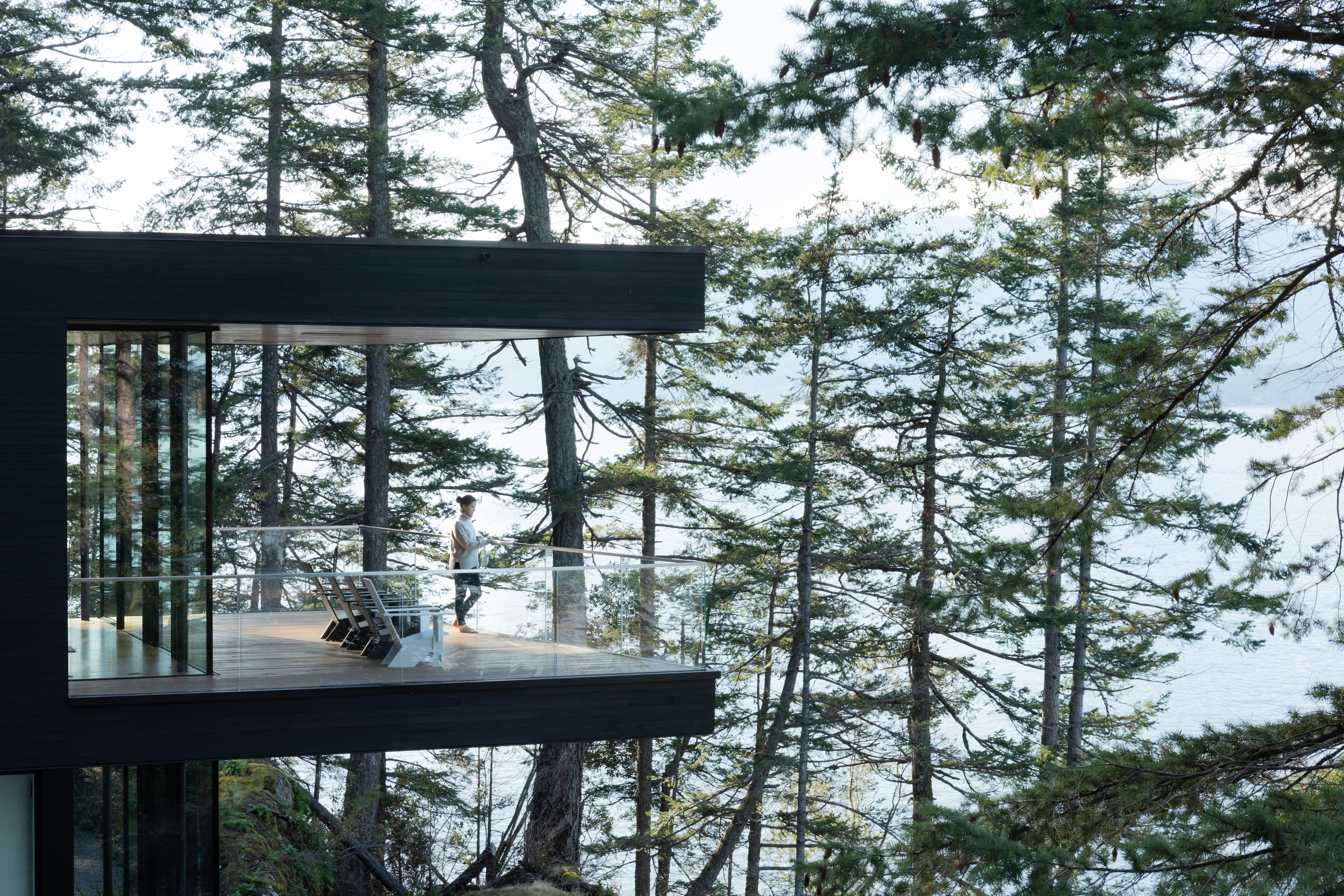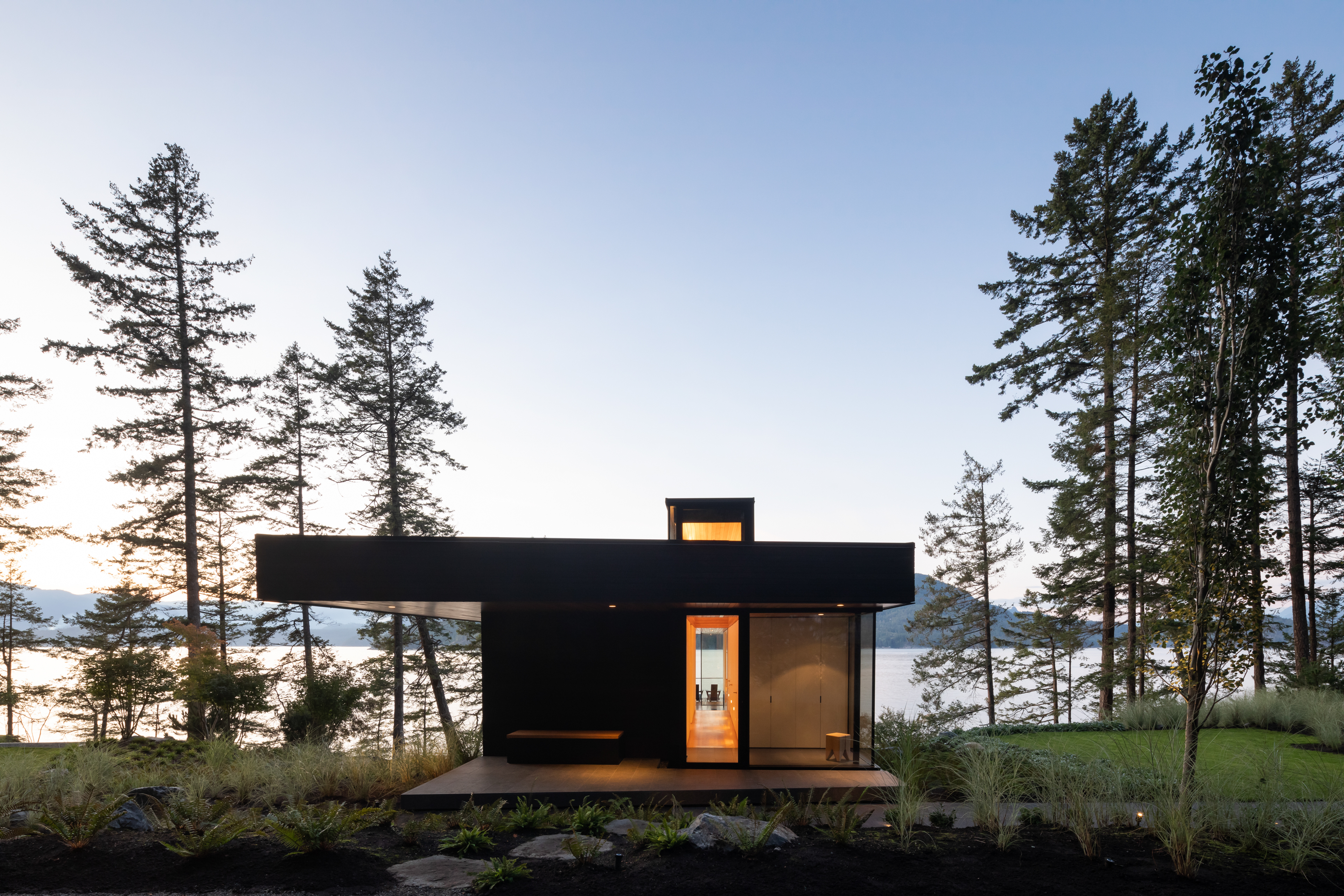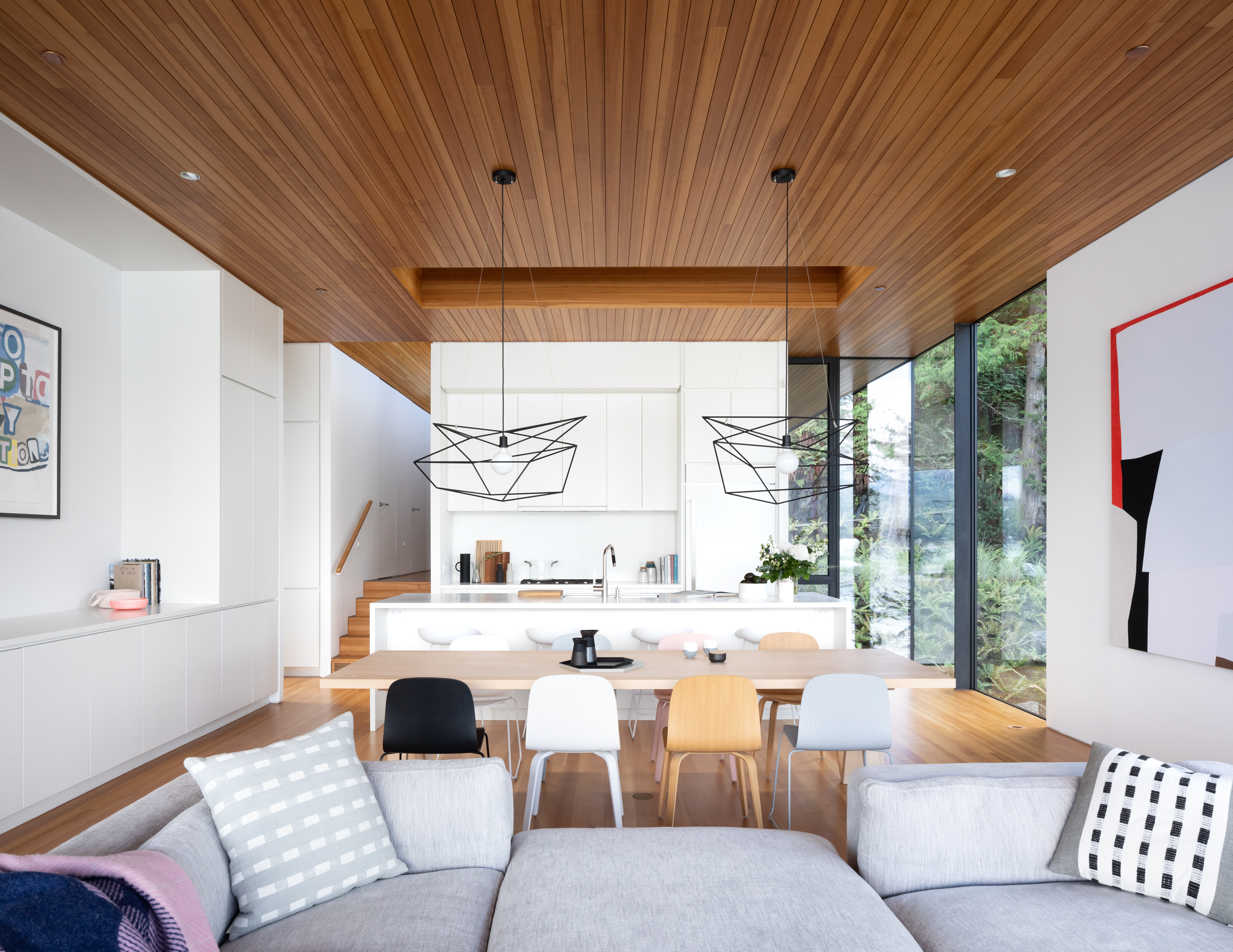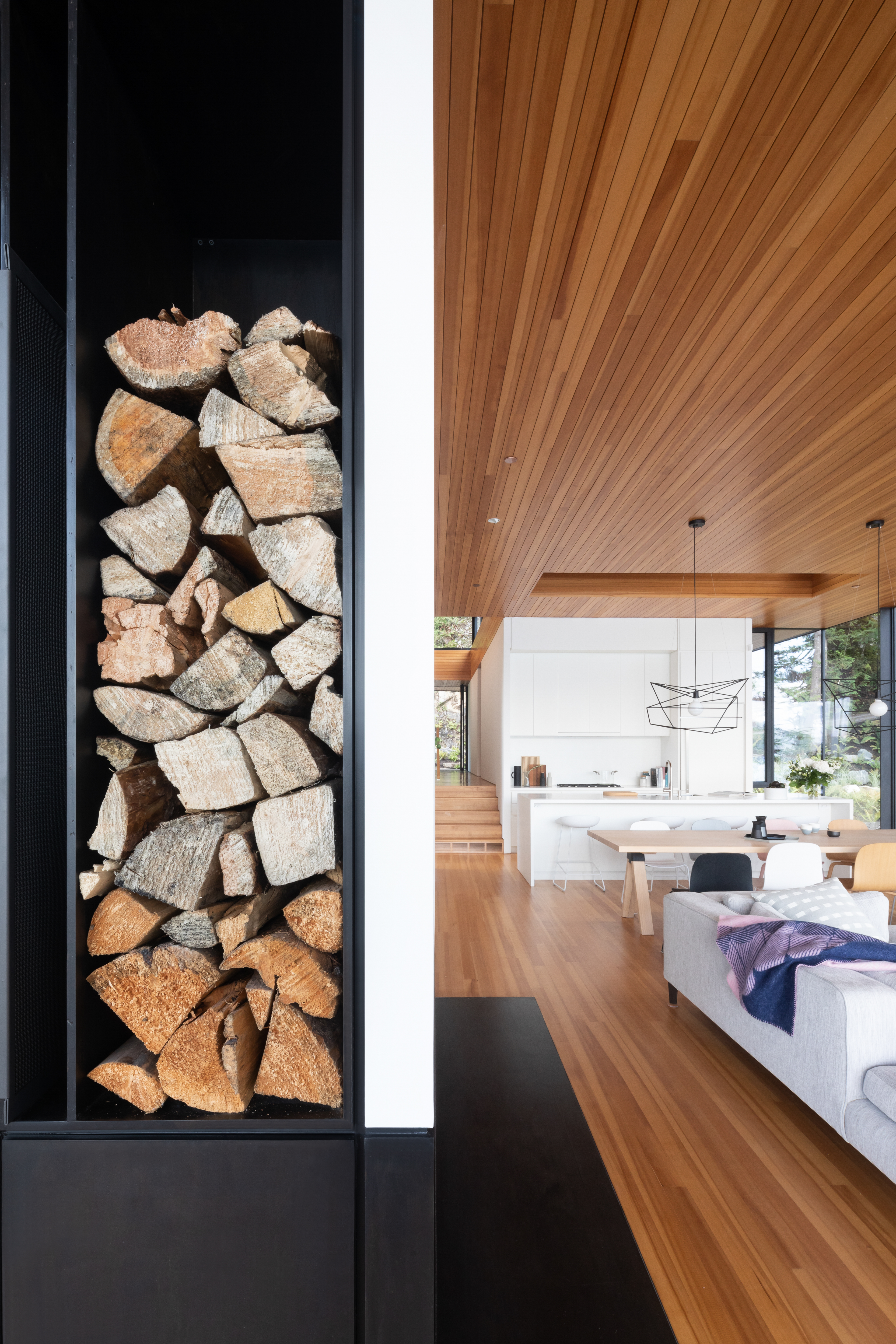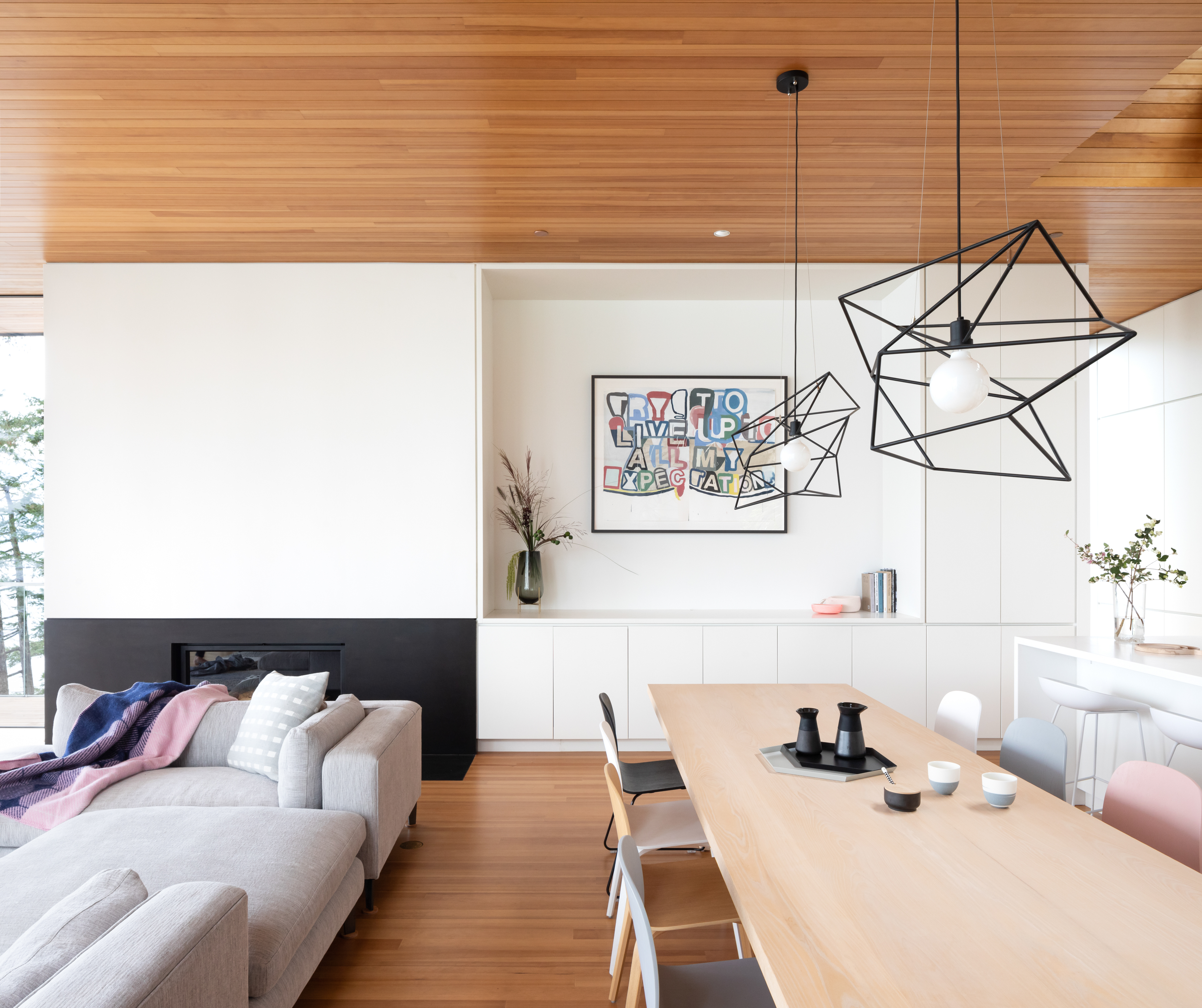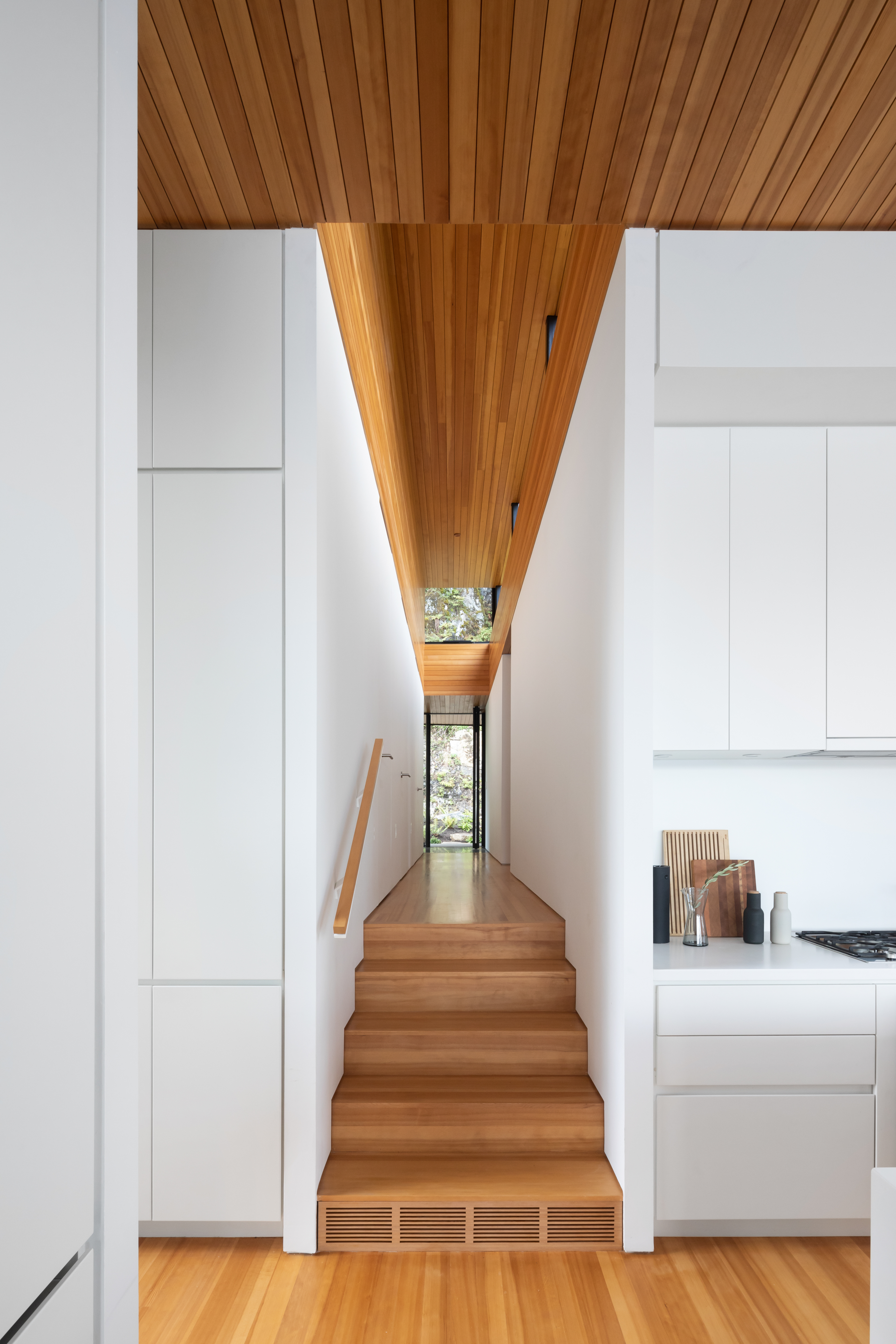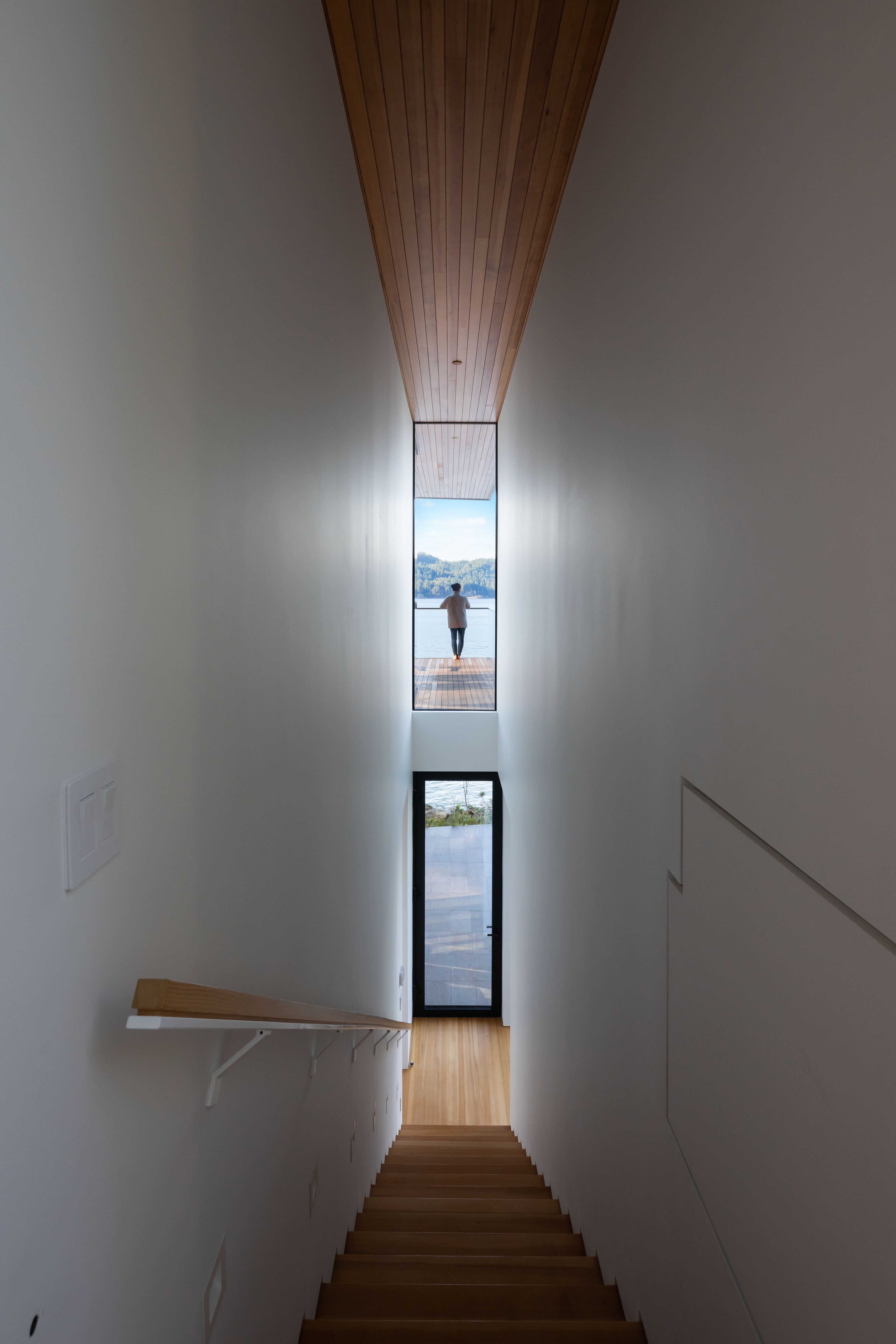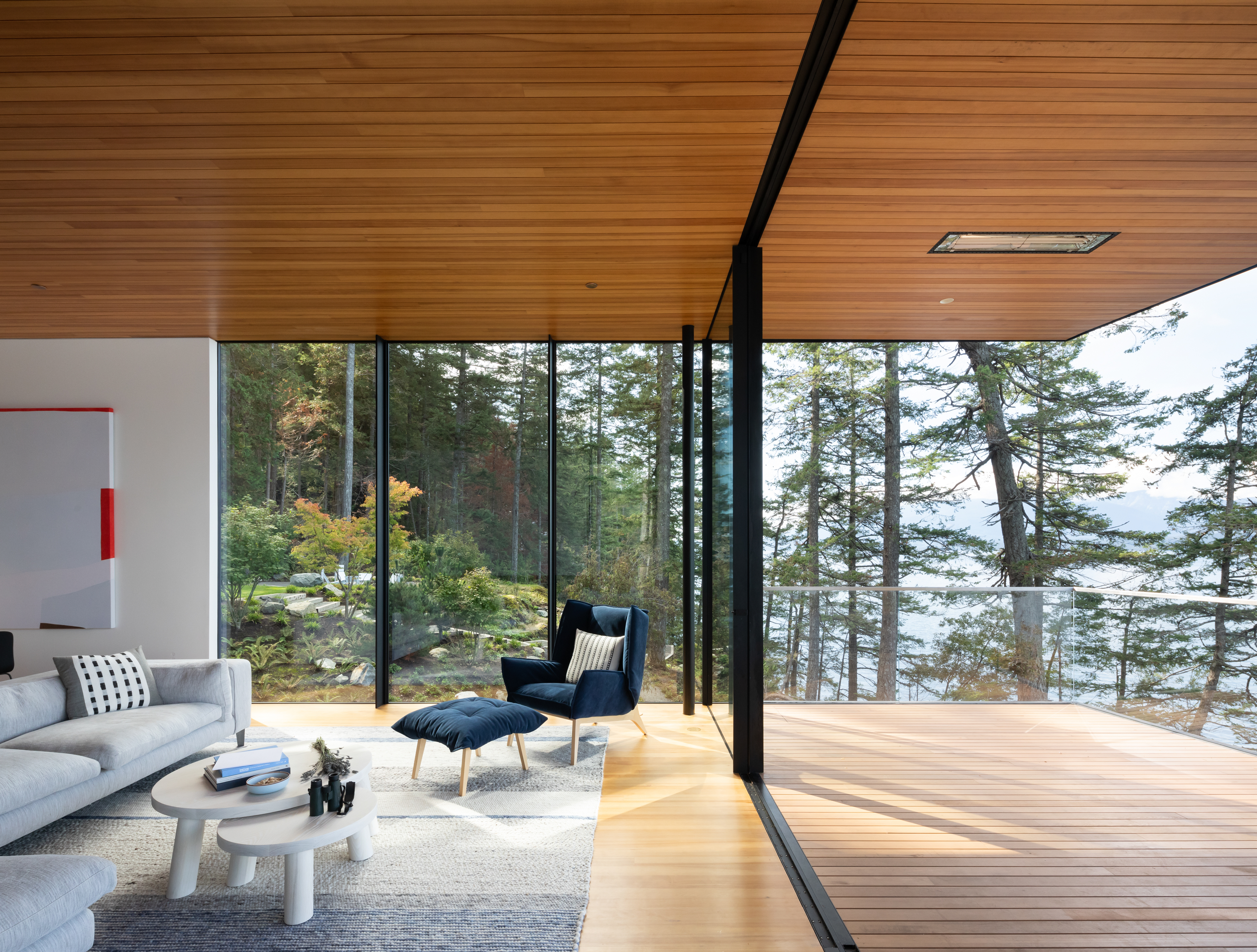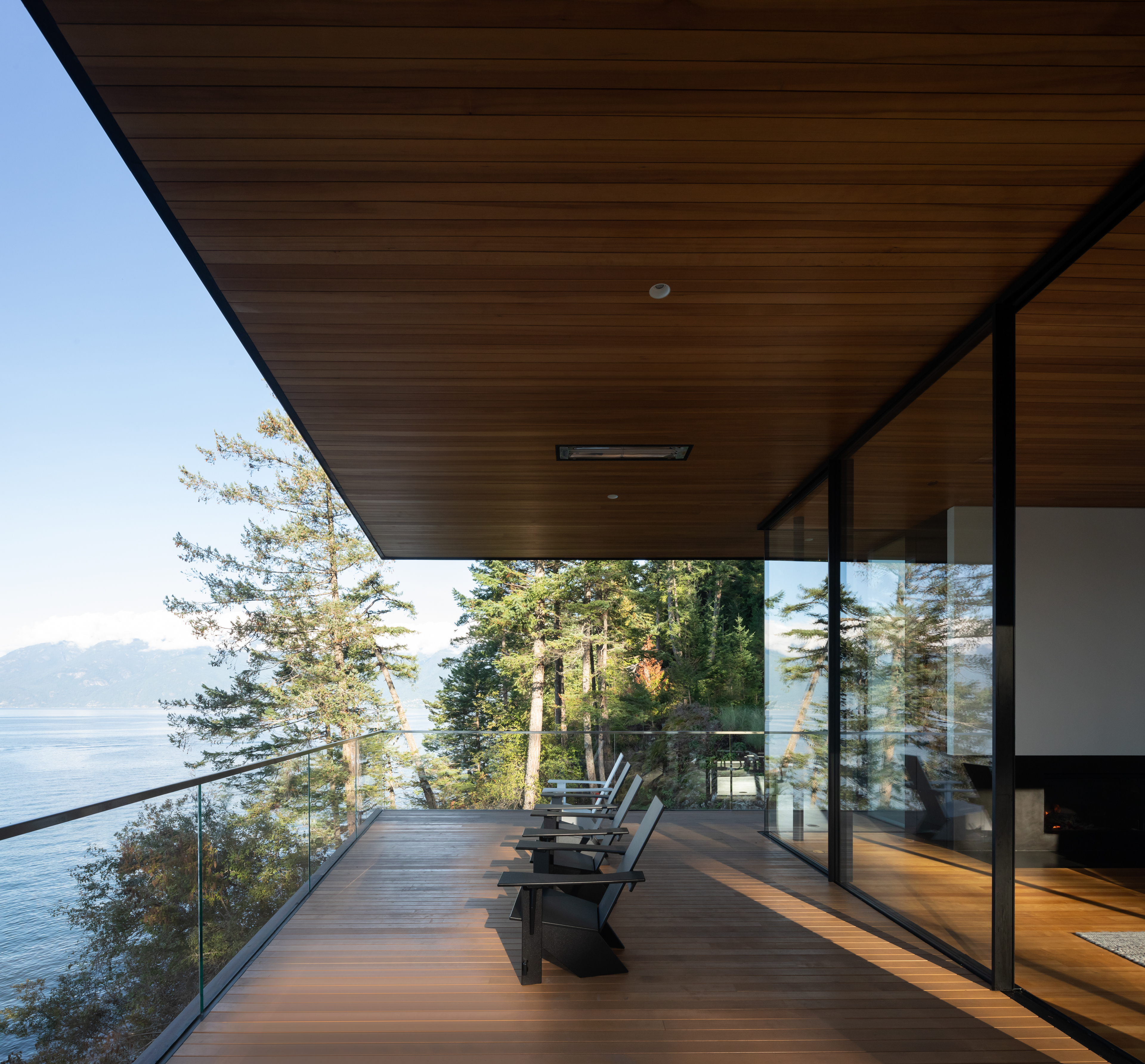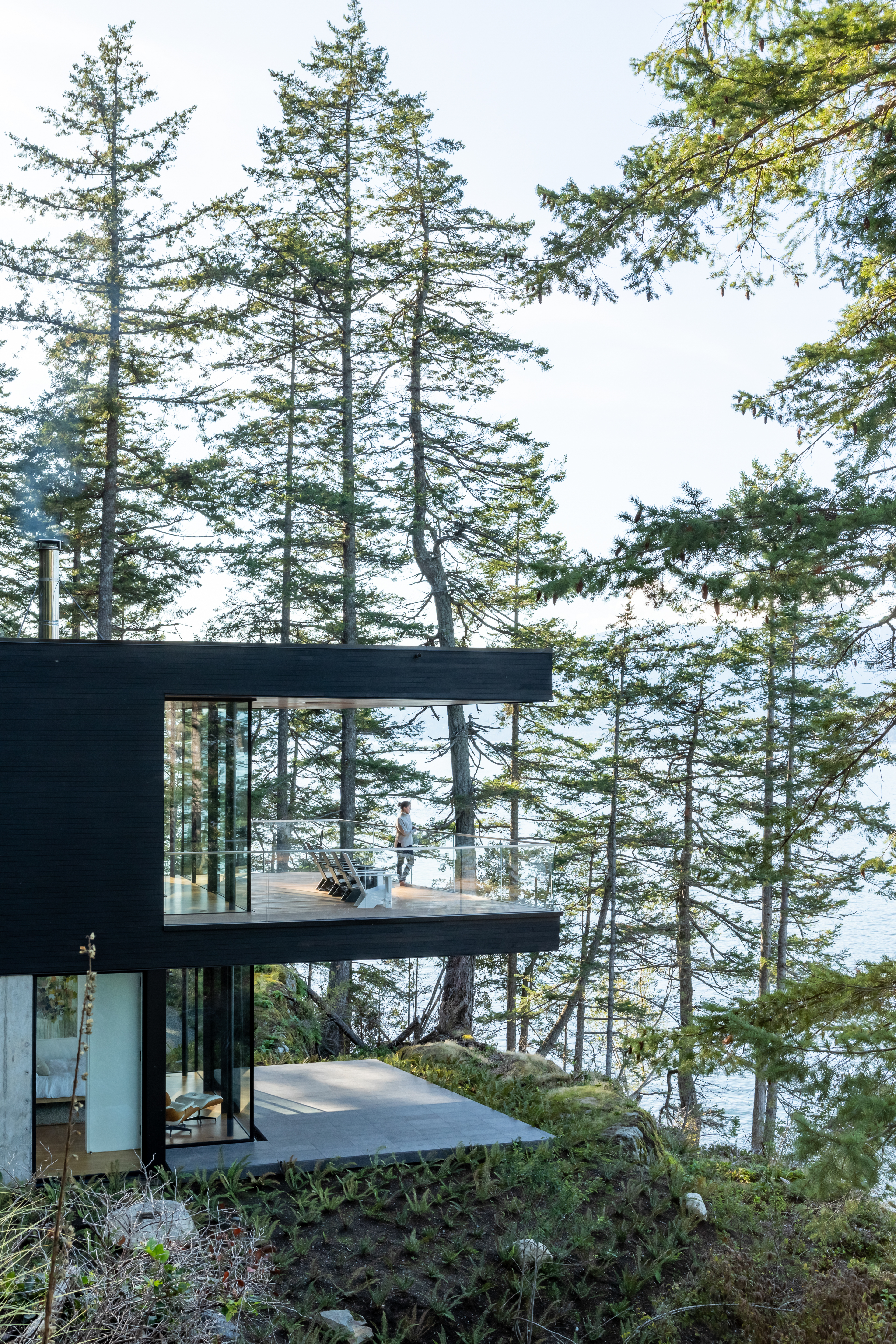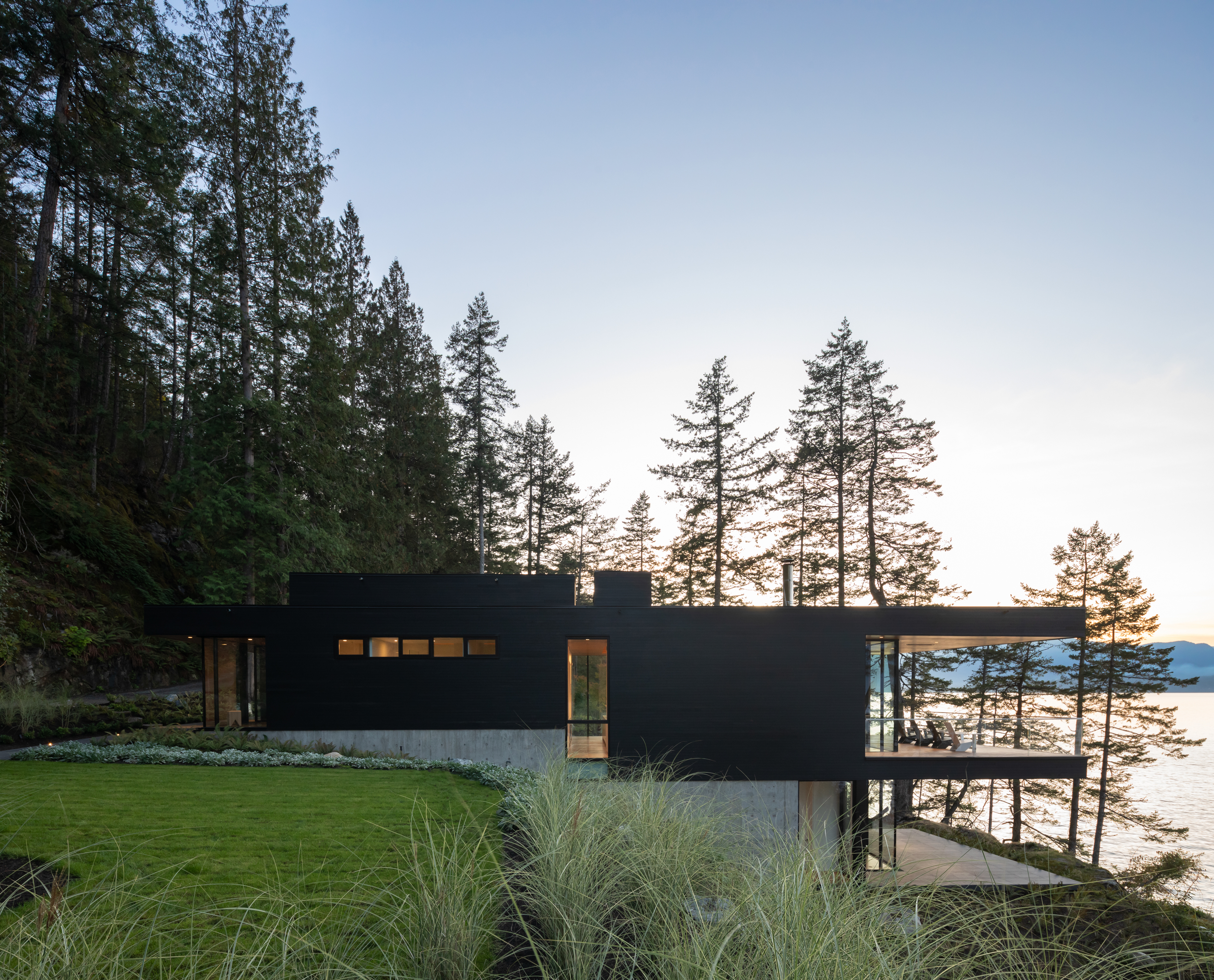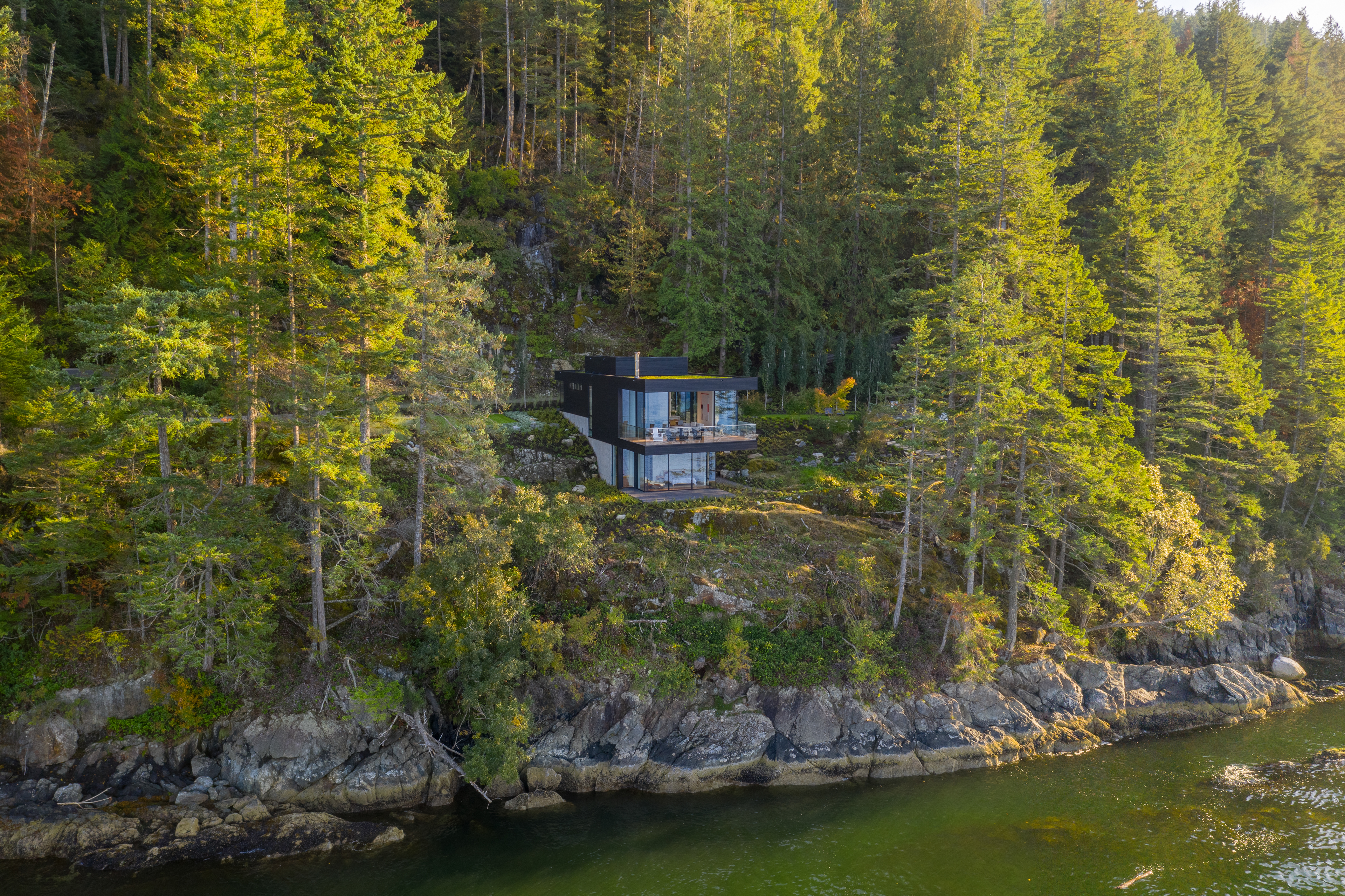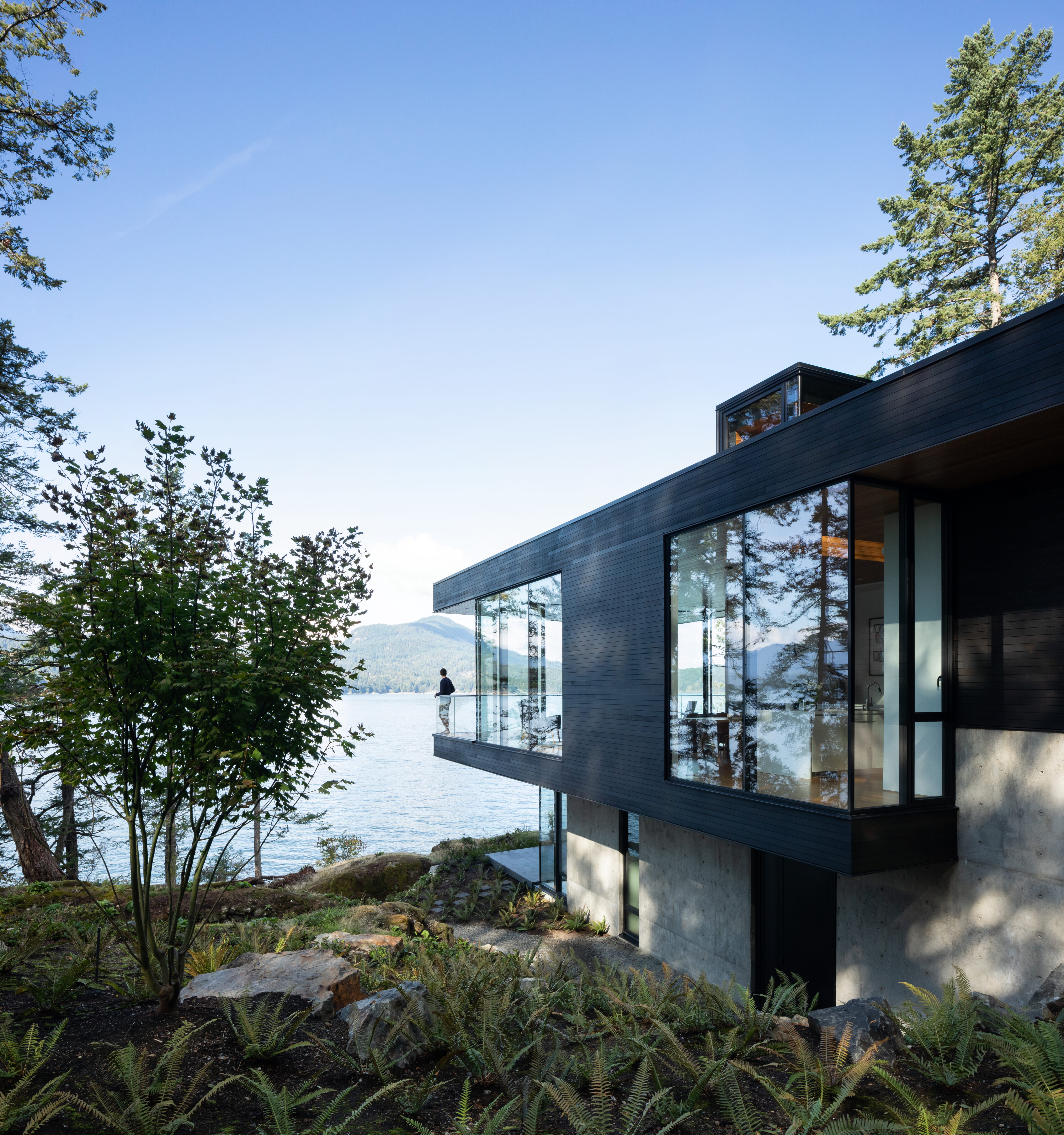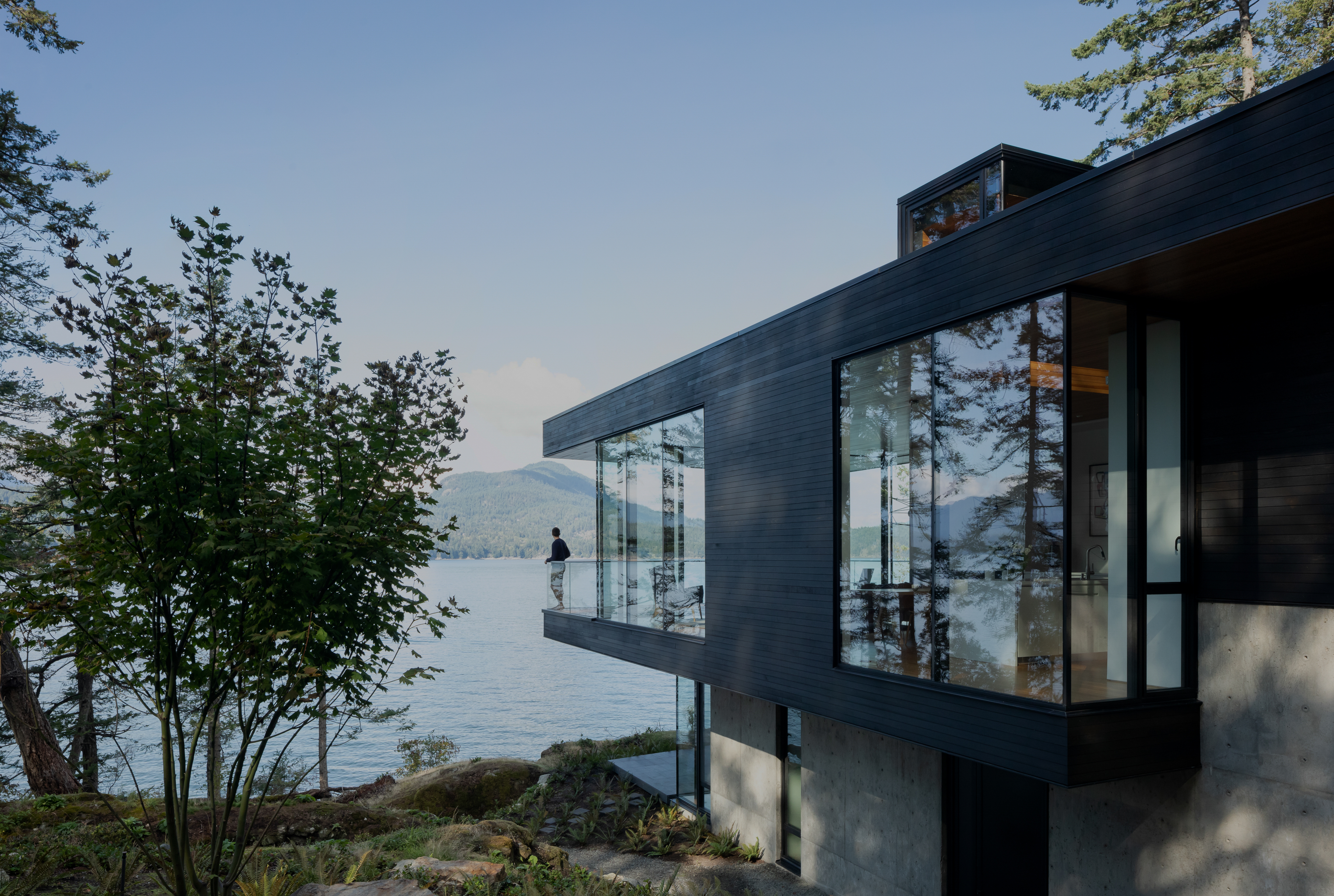
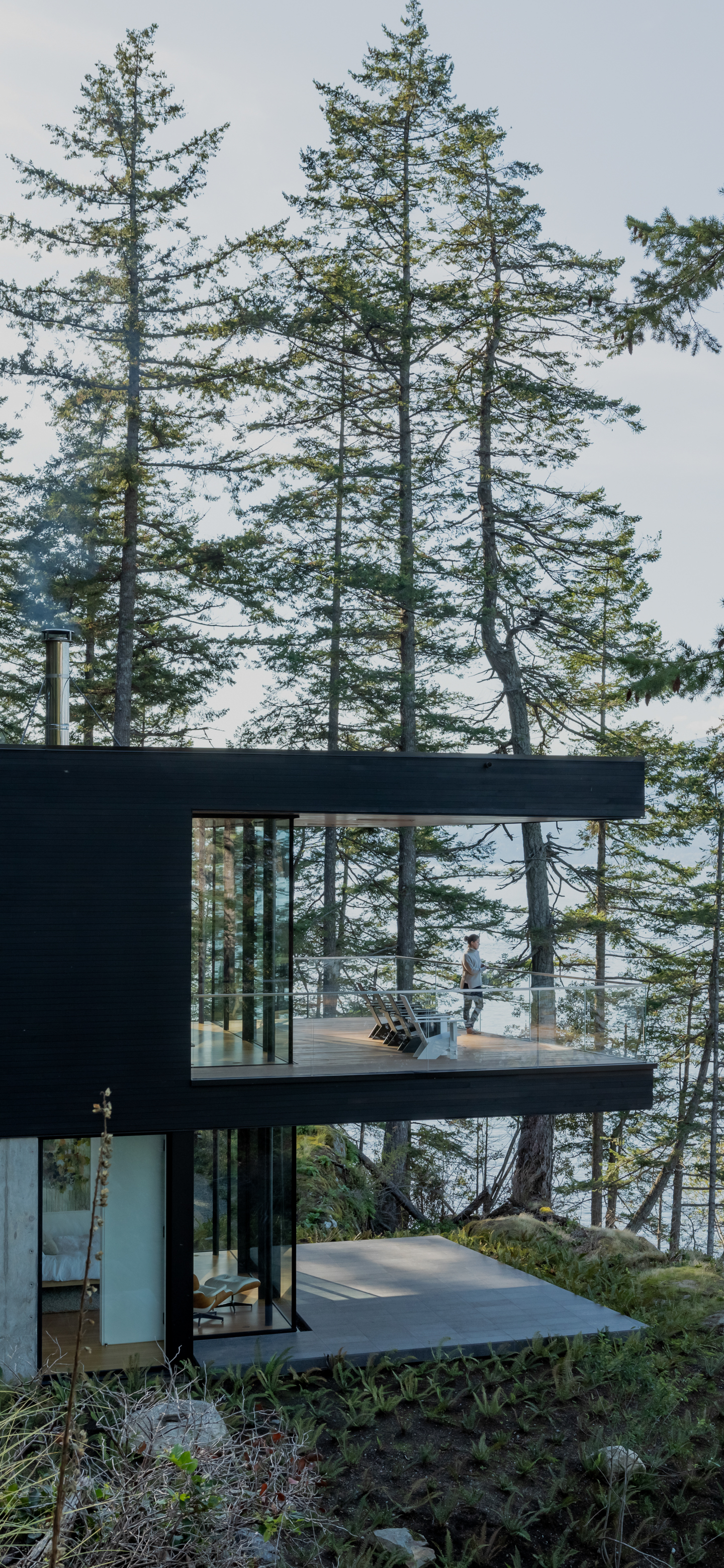
Nestled along the north shore of Bowen Island in British Columbia, the Bowen Island House is conceived as a quiet retreat for a young family. The project offers a contemporary interpretation of a cabin in the woods, balancing the comforts of modern living with a deliberate connection to its natural setting. Modest in scale, the house presents an alternative to larger residential development on the island, emphasizing restraint and environmental sensitivity.
The remote site informs a design approach grounded in formal economy and careful detailing. A compact footprint and straightforward construction strategies minimize impact on the landscape while supporting efficient use of space and resources. The planning prioritizes essential domestic functions, creating a highly functional interior that remains closely attuned to its surroundings through orientation, material selection, and controlled openings.
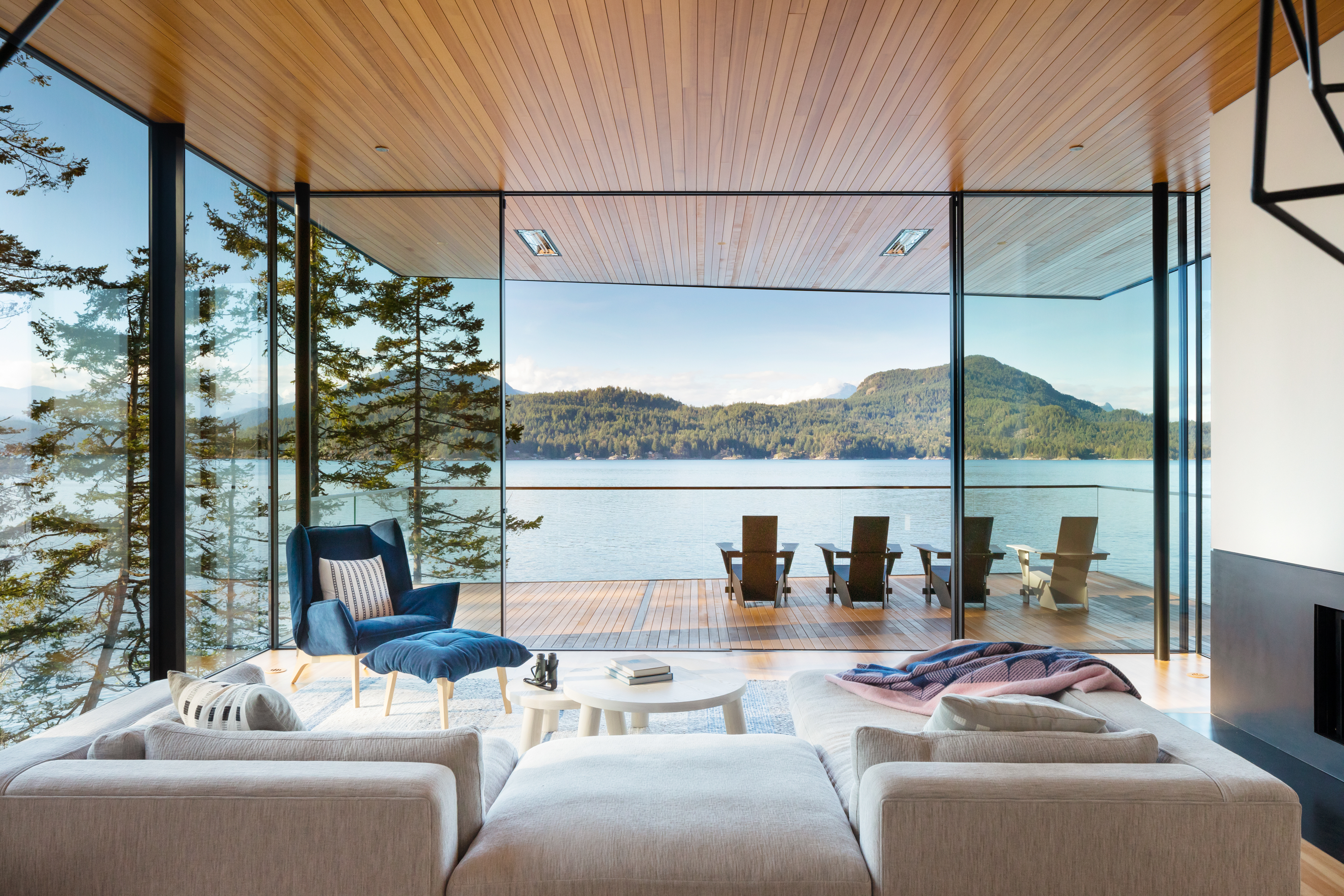
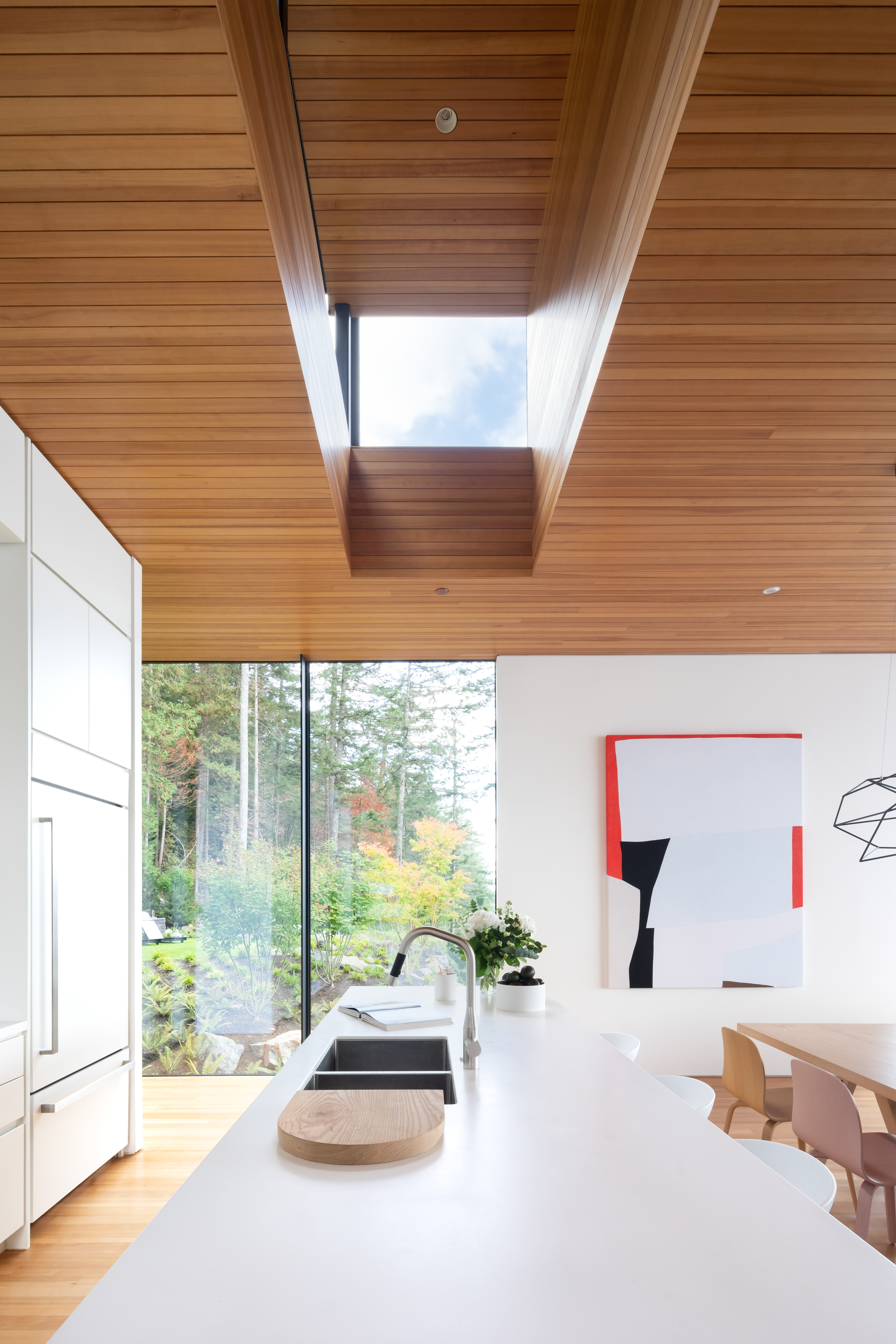
A clear spatial sequence organizes movement through the house, guiding occupants from the forest floor toward elevated views over the shoreline. Openings are positioned to frame both intimate and expansive perspectives, with minimal detailing that reduces the visual weight of the enclosure and maximizes daylight. The restrained tectonic language and spatial clarity work in concert to embed the building within its coastal context, establishing a quiet and enduring relationship between architecture and landscape.